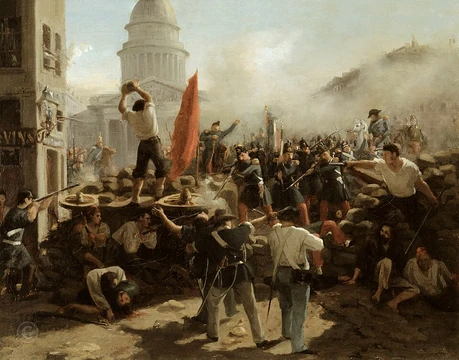
Xinhai Revolution
Revolution that ended imperial rule in China.

The Xinhai Revolution, also known as the 1911 Revolution or Hsinhai Revolution, culminated in the end of China's last imperial dynasty, the Qing dynasty, and led to the establishment of the Republic of China (ROC). The revolution was the culmination of a decade of agitation, revolts, and uprisings. Its success marked the end of Chinese monarchy, the 267-year reign of the Qing, over two millennia of imperial rule in China, and the beginning of China's early republican era.
- Name
- Xinhai Revolution
- Also known as
- 1911 Revolution, Hsinhai Revolution
- Start date
- 10 October 1911
- End date
- 12 February 1912 (Qing abdication)
- Field
- Revolution, political change
- Location
- China
- Outcome
- End of Qing dynasty, establishment of Republic of China
Verified Timeline
Lore & Background
The flashpoint came on 10 October 1911 with the Wuchang Uprising, an armed rebellion by members of the New Army. Similar revolts then broke out spontaneously around the country, and revolutionaries in every province renounced the Qing dynasty. On 1 November 1911, the Qing court appointed Yuan Shikai (leader of the Beiyang Army) as prime minister, and he began negotiations with the revolutionaries. In Nanjing, revolutionary forces created a provisional coalition government. On 1 January 1912, the Advisory Council declared the establishment of the Republic of China, with Sun Yat-sen, leader of the Tongmenghui, as President of the Republic of China. A brief civil war between the North and the South ended in compromise. Sun resigned in favor of Yuan, who would become president of the new national government if he could secure the abdication of the Qing emperor. The edict of abdication of the six-year-old Xuantong Emperor was promulgated on 12 February 1912. Yuan was sworn in as president on 10 March 1912.
Reader's Guide
The Xinhai Revolution was the culmination of a decade of agitation, revolts, and uprisings. The Qing had long struggled to reform the government and resist foreign aggression, but conservatives in the Qing court opposed the program of reforms after 1900 as too radical and reformers considered it too slow. Several factions, including underground anti-Qing groups, revolutionaries in exile, reformers who wanted to save the monarchy by modernizing it, and activists across the country debated how or whether to overthrow the Qing dynasty. After the revolution, in December 1915, Yuan restored the monarchy and proclaimed himself the Hongxian Emperor, but the move was met with strong opposition by the population and the Army, leading to his abdication in March 1916 and the Republic's reinstatement. Yuan's failure to consolidate a legitimate central government before his death in June 1916 led to decades of political division and warlordism, including an attempt at imperial restoration of the Qing dynasty. The name 'Xinhai Revolution' derives from the traditional Chinese calendar, where 'Xinhai' (辛亥) is the label corresponding to 1911 according to the sexagenary cycle. The governments of both the Republic of China and the People's Republic of China consider themselves the legitimate successors to the 1911 Revolution and honor the ideals of the revolution, including nationalism, republicanism, modernization of China, and national unity. 10 October is the National Day of the Republic of China on Taiwan, and the Anniversary of the 1911 Revolution in China.
Did You Know?
- The name 'Xinhai Revolution' derives from the traditional Chinese calendar, where 'Xinhai' (辛亥) is the label corresponding to 1911 according to the sexagenary cycle.
- The flashpoint came on 10 October 1911 with the Wuchang Uprising, an armed rebellion by members of the New Army.
- The edict of abdication of the six-year-old Xuantong Emperor was promulgated on 12 February 1912.
- In December 1915, Yuan Shikai restored the monarchy and proclaimed himself the Hongxian Emperor, but abdicated in March 1916 due to strong opposition.
- 10 October is the National Day of the Republic of China on Taiwan, and the Anniversary of the 1911 Revolution in China.
More in Revolutions & Uprisings 1-15
Spotted an error? Know more?
This is a living reference — every entry is fact-audited, and reader corrections feed straight into our audit queue. Suggest an edit · See this site's audit record