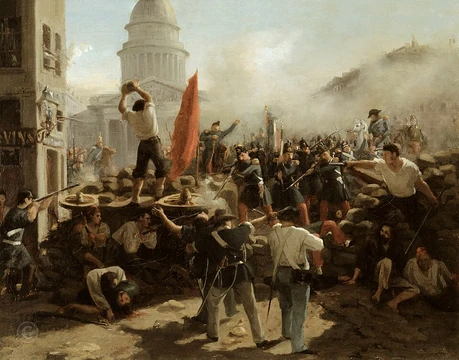
Arab Spring
A wave of pro-democracy protests and uprisings across the Arab world.

via Wikipedia: Arab Spring · see source
The Arab Spring was a series of pro-democracy anti-government protests, uprisings, and armed rebellions that spread across much of the Arab world in the early 2010s. It began in Tunisia in response to the death of Mohamed Bouazizi by self-immolation and spread to Libya, Egypt, Yemen, Syria, and Bahrain, among other countries. The wave of initial revolutions and protests faded by mid- to late 2012, but multiple large-scale conflicts followed, including civil wars in Syria, Libya, and Yemen, and the rise of ISIS.
- start_year
- 2010
- end_year
- 2012
- field
- Political protest movement
- region
- Arab world
- known_for
- Pro-democracy uprisings and regime changes in Tunisia, Libya, Egypt, and Yemen
Verified Timeline
Lore & Background
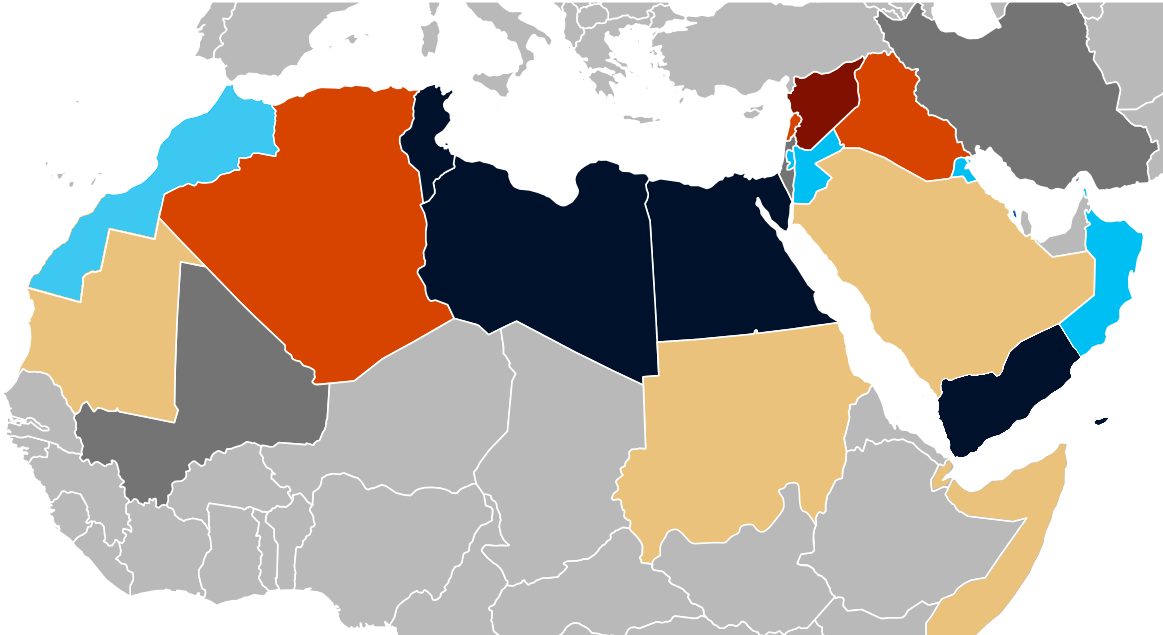
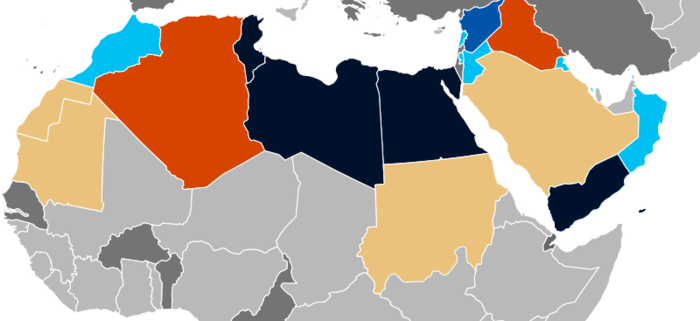
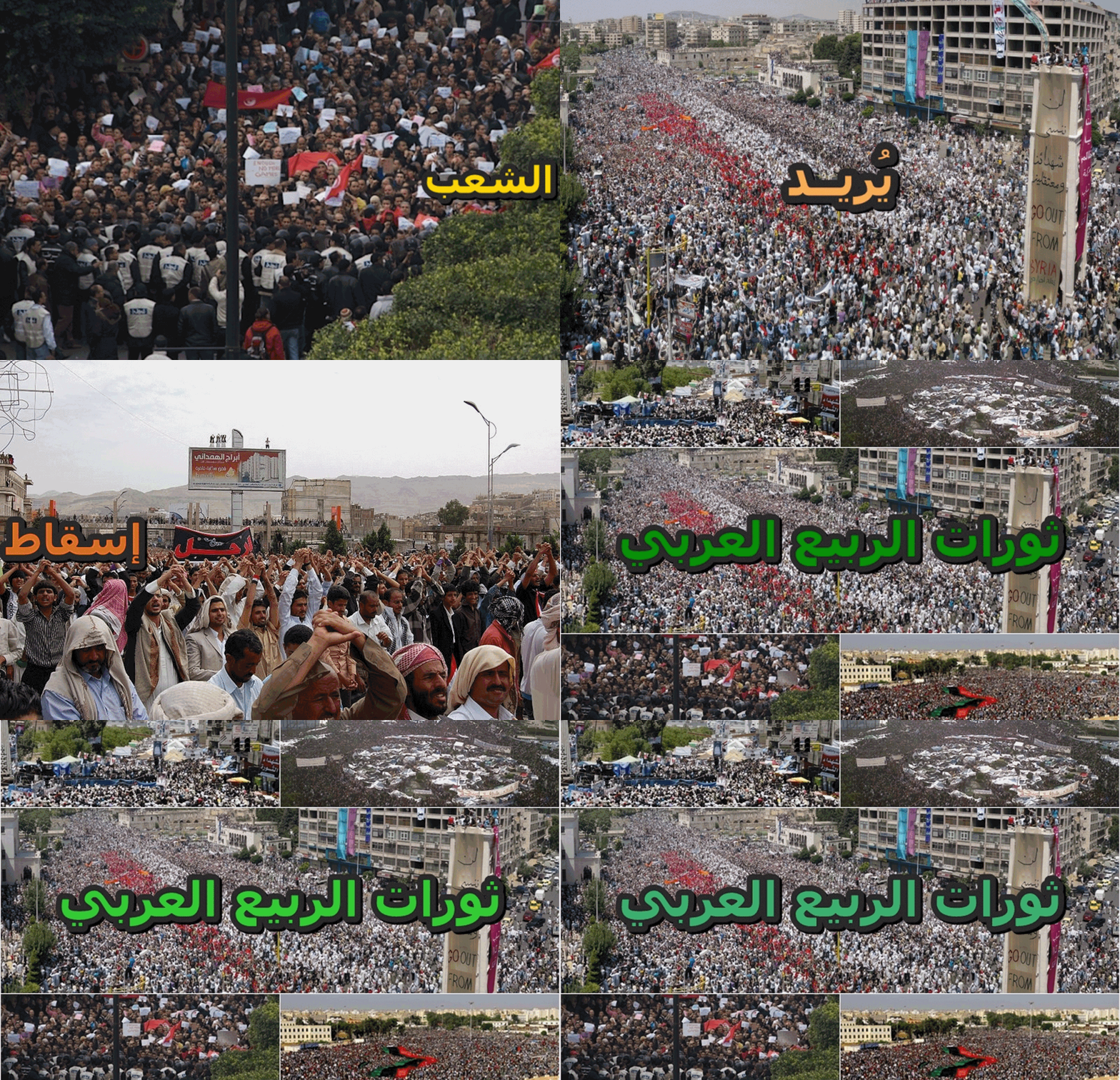
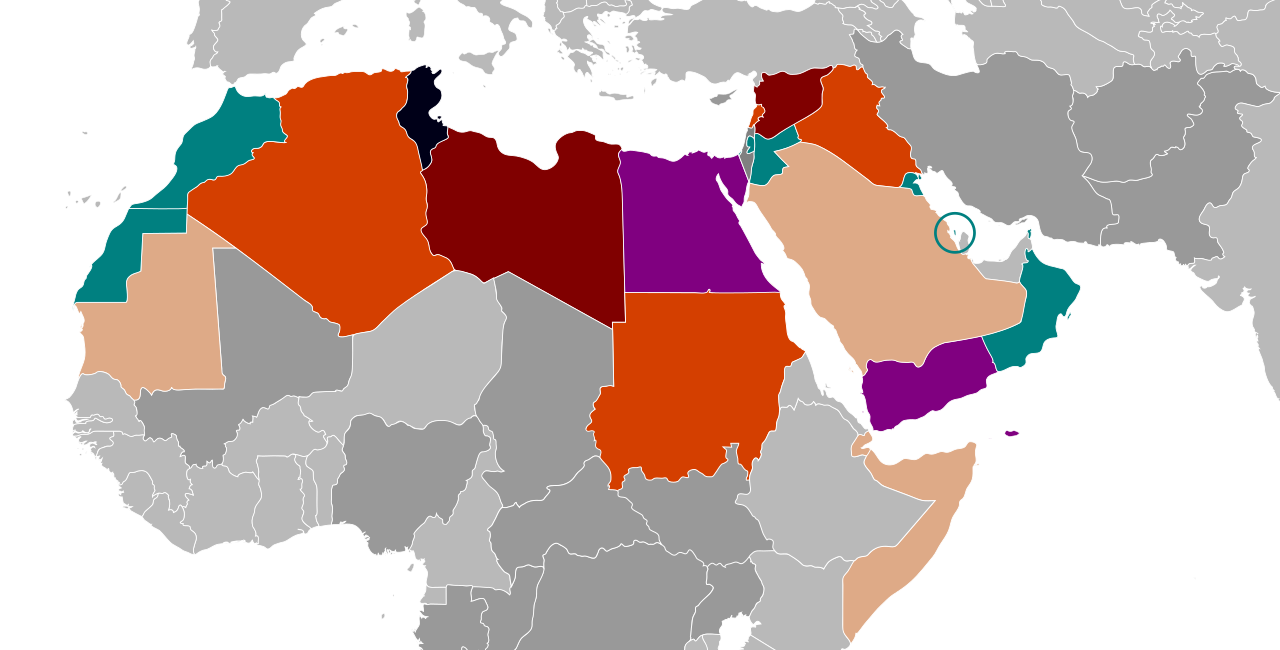
The Arab Spring began in Tunisia after Mohamed Bouazizi's self-immolation, then spread to five other countries: Libya, Egypt, Yemen, Syria, and Bahrain. Rulers deposed in 2011 included Zine El Abidine Ben Ali of Tunisia, Muammar Gaddafi of Libya, and Hosni Mubarak of Egypt; Ali Abdullah Saleh of Yemen was deposed in 2012. Sustained street demonstrations also occurred in Morocco, Iraq, Algeria, Lebanon, Jordan, Kuwait, Oman, and Sudan, with minor protests in Djibouti, Mauritania, Palestine, Saudi Arabia, and the Western Sahara. A major slogan was 'ash-shaʻb yurīd isqāṭ an-niẓām' (the people want to bring down the regime).
Reader's Guide
The Arab Spring's significance lies in its widespread challenge to authoritarian regimes across the Arab world, leading to the overthrow of four long-standing rulers. However, the initial hopes for democratization and economic equity collapsed amid counter-revolutionary moves, foreign interventions, and destructive civil wars in Syria, Iraq, Libya, and Yemen, leading some to call the aftermath the 'Arab Winter'. The term 'Arab Spring' itself is contested, with critics arguing it was coined by Western commentators and minimized revolutionary aims. A new wave of protests beginning in 2018, sometimes called the 'Second Arab Spring', showed that the conditions that started the movement have not faded. As of 2025, multiple conflicts originating from the Arab Spring continue, including the Syrian civil war (with a major shift in December 2024), the Libyan civil war, and the Yemeni civil war.
Did You Know?
- The Arab Spring began in Tunisia after the self-immolation of Mohamed Bouazizi.
- Four rulers were deposed: Zine El Abidine Ben Ali (Tunisia), Muammar Gaddafi (Libya), and Hosni Mubarak (Egypt) in 2011, and Ali Abdullah Saleh (Yemen) in 2012.
- A major slogan of the demonstrators was 'ash-shaʻb yurīd isqāṭ an-niẓām' (the people want to bring down the regime).
- Political scientist Marc Lynch may have unintentionally coined the term 'Arab Spring' in a January 6, 2011 article for Foreign Policy.
- A new wave of protests beginning in 2018, sometimes called the 'Second Arab Spring', led to the resignation of prime ministers Haider al-Abadi of Iraq in 2018 and Saad Hariri of Lebanon in 2020, and the overthrow of presidents Omar al-Bashir of Sudan and Abdelaziz Bouteflika of Algeria in 2019.
Origins and the Wave Across the Arab World
The Arab Spring trace its spark to a single act of desperation in Tunisia: the self-immolation of Mohamed Bouazizi, whose death ignited a broader wave of pro-democracy protests, uprisings, and armed rebellions that swept through much of the Arab world in the early 2010s. From that Tunisian starting point, the movement rapidly reached five additional nations—Libya, Egypt, Yemen, Syria, and Bahrain—where sustained street demonstrations, riots, and in some cases full-scale civil wars erupted. The political cost was staggering: within roughly a year and a half, four long-standing leaders were forced from power. Zine El Abidine Ben Ali of Tunisia, Muammar Gaddafi of Libya, and Hosni Mubarak of Egypt all fell in 2011, followed by Ali Abdullah Saleh of Yemen in 2012. The movement's energy was not confined to those five countries. Significant protests and social unrest also gripped Morocco, Iraq, Algeria, Lebanon, Jordan, Kuwait, Oman, and Sudan, while smaller demonstrations surfaced in Djibouti, Mauritania, Palestine, Saudi Arabia, and the Western Sahara. Uniting these diverse actions was a single, thunderous chant echoed across the region: 'the people want to bring down the regime.'
From Uprising to Prolonged Conflict
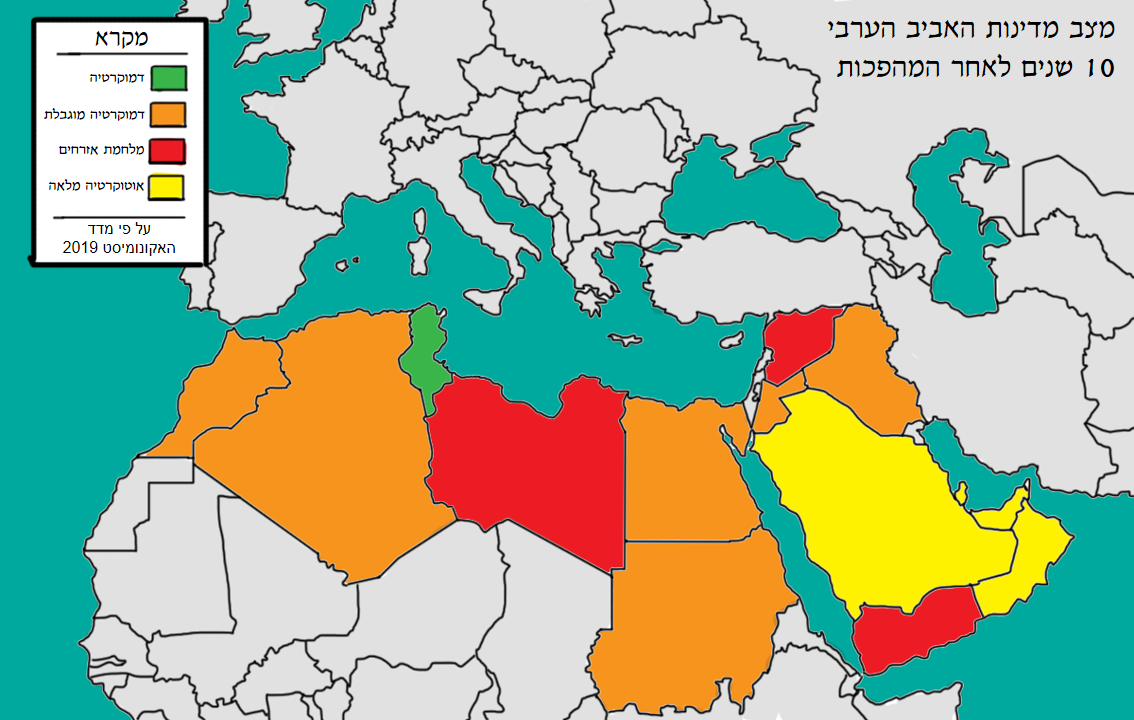
By the middle and later months of 2012, the initial revolutionary fervor had largely dissipated, replaced by a far darker trajectory. Authorities, pro-government militias, counterdemonstrators, and national militaries in several countries responded to the protests with sustained violence, and in some instances protesters answered that force with their own. The consequences were catastrophic. Syria descended into a full civil war. In Iraq, the emergence of ISIS triggered a new insurgency and a second civil war. Egypt experienced its own crisis, marked by the election and subsequent removal of Mohamed Morsi, followed by continued unrest and insurgency. Libya and Yemen each slid into protracted crises and civil wars. Analysts noted a pattern: regimes that lacked both major oil wealth and hereditary succession structures proved far more vulnerable to being overthrown. In the power vacuums that opened, a contentious struggle emerged between religious elites seeking to consolidate authority and citizens demanding democratic participation. The early, optimistic hopes for an end to corruption, expanded political voice, and greater economic equity were shattered by counter-revolutionary interventions by foreign state actors in Yemen, military involvement in Bahrain and Yemen, and the devastating wars that tore through Syria, Iraq, Libya, and Yemen. Observers began calling this grim aftermath the 'Arab Winter.'
A Name in Dispute
The very label 'Arab Spring' has been a source of contention since the events began. The phrase was not born on the streets of Tunis or Cairo; it was coined by Western commentators. Political scientist Marc Lynch later acknowledged that he may have inadvertently popularized the term in a January 6, 2011 article for the US journal Foreign Policy. The people actually on the ground described their actions in their own vocabulary: intifada (uprising), sahwa (awakening), nahda (renaissance), al-marar al-Arabi (the Arab bitterness), karama (dignity), and thawra (revolution). Critics argued that Western governments, scholars, and media deliberately used 'Spring' to soften and redirect the revolutionary aims of the protesters toward a Western-style liberal democratic model. Joseph Massad, writing for Al Jazeera, called the term part of a US strategy to control the movement's goals. The seasonal metaphor also echoed earlier Western precedents—the 'Spring of Nations' of 1848 and the Prague Spring of 1968, where Czech student Jan Palach set himself on fire much as Bouazizi did. When Islamist parties won elections in some countries, American pundits quickly rebranded the phenomenon as an 'Islamist Spring' or 'Islamist Winter,' further illustrating how the naming reflected external expectations rather than the protesters' own aspirations.
Echoes, Revivals, and Unfinished Wars
The story did not end with the 2012 fade. In 2018, a fresh wave of popular protest swept the region, producing concrete political changes: Iraq's prime minister Haider al-Abadi resigned in 2018, Lebanon's Saad Hariri stepped down in 2020, and in 2019 the long-ruling presidents Omar al-Bashir of Sudan and Abdelaziz Bouteflika of Algeria were both overthrown. Observers sometimes label this second wave the 'Second Arab Spring,' a reminder that the underlying grievances—authoritarianism, economic exploitation, and political exclusion—had never truly disappeared. Continued protest movements in Algeria, Sudan, Iraq, Lebanon, Egypt, and Syria have been interpreted as direct continuations of the original uprisings. As of 2025, several of the conflicts that trace their origins to the Arab Spring remain unresolved. A dramatic shift in Syria's civil war came in December 2024, when a rebel offensive toppled the Assad regime after more than a decade of warfare. In Libya, a major civil war eventually concluded, though foreign powers had intervened heavily. In Yemen, a civil war continues to devastate the country, a stark reminder that the region's struggle for self-determination remains, in many places, an open wound.
Gallery
Frequently Asked Questions
Who is Arab Spring?
The Arab Spring is not a single figure but a collective wave of grassroots pro-democracy uprisings that swept across multiple nations in the Arab world from 2010 to 2012. It encompasses mass street protests, civil disobedience, and armed rebellions in countries including Tunisia, Egypt, Libya, Yemen, Syria, and Bahrain.
What are Arab Spring's powers or role?
The movement's core function was to challenge and, in several cases, dismantle long-standing authoritarian regimes through sustained popular pressure. It directly resulted in the removal of governments in Tunisia, Egypt, Libya, and Yemen, fundamentally reshaping the political landscape of those states.
How does Arab Spring's story end?
The initial surge of protests and regime changes largely faded by mid-to-late 2012, but the aftermath proved far more destructive than the uprisings themselves. Prolonged civil wars erupted in Syria, Libya, and Yemen, and the power vacuums contributed to the rise of ISIS and years of ongoing instability.
Why is Arab Spring important?
It stands as one of the most significant examples of 21st-century popular mobilization toppling entrenched leaders across an entire region within a matter of months. The movement became a defining reference point for democratic activism and regime change in the Middle East and North Africa.
Where and when did Arab Spring begin?
The uprisings were ignited in Tunisia in late 2010 after street vendor Mohamed Bouazizi set himself on fire in protest against government corruption and police harassment. That single act of self-immolation triggered mass demonstrations that rapidly spread to neighboring and other Arab nations within weeks.
More in Revolutions & Uprisings 1-15
Spotted an error? Know more?
This is a living reference — every entry is fact-audited, and reader corrections feed straight into our audit queue. Suggest an edit · See this site's audit record