1989 Tiananmen Square protests and massacre
Student and worker protests ended in a violent military crackdown.

The Account 2 · CC BY-SA 4.0
The protests were initiated after the death of former pro-reform Chinese Communist Party general secretary Hu Yaobang, amid rapid economic development and social change in post-Mao China. The movement reflected anxieties about inflation, corruption, the dismantling of the 'iron rice bowl,' and restrictions on political participation, with demonstrators calling for reforms such as greater political accountability, democracy, and freedom of speech. The Chinese government declared martial law in late May and deployed troops to occupy Tiananmen Square on the night of 3 June, resulting in a violent crackdown that killed and injured many demonstrators, bystanders, and soldiers. The events are considered a watershed moment that set limits on political expression in China lasting to the present day.
- location
- Beijing, China (primarily Tiananmen Square and Chang'an Avenue)
- participants
- Students, workers, and other civilians
- known_for
- Tiananmen Square massacre, June Fourth Incident, '89 Democracy Movement
- death_toll
- Estimates vary from several hundreds to the low thousands, with thousands more wounded
Lore & Background
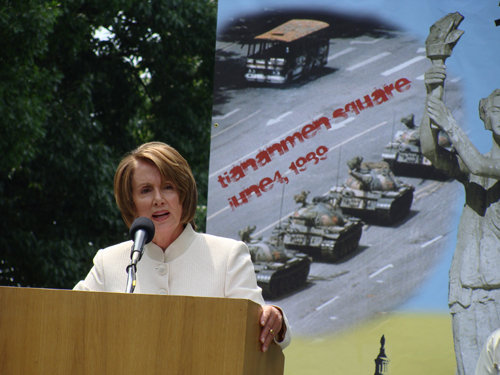
Student demonstrators called for political accountability, democracy, and press freedom, while workers focused on economic issues. By 17 May, about one million people had assembled in Tiananmen Square. The Chinese government initially used both conciliatory and hardline tactics, exposing deep divisions within party leadership. A student-led hunger strike in May galvanized national support, and protests spread to some 400 cities. After weeks of standoffs, CCP leadership decided on 1 June to clear the square. Troops advanced on the early morning of 4 June, engaging in bloody clashes along Chang'an Avenue, particularly near the Muxidi area. On 5 June, an unidentified individual later called 'Tank Man' briefly stood before a column of tanks; a photograph of this event became widely circulated internationally.
Reader's Guide
The crackdown had immediate and long-term consequences: Western countries imposed arms embargoes on China, and the Chinese government suppressed other protests, carried out mass arrests (catalyzing Operation Yellowbird), strictly controlled media coverage, and demoted or purged officials deemed sympathetic. The events set lasting limits on political expression in China and remain one of the most sensitive and widely censored topics. The term 'Tiananmen Square Massacre' is commonly used internationally, though much of the violence occurred outside the square along Chang'an Avenue.
Did You Know?
- The protests spread to some 400 cities across China.
- At the height of the protests on May 17, about one million people were assembled in Tiananmen Square.
- The photograph of 'Tank Man' standing before a column of tanks on June 5 is often regarded as one of the most recognizable images of the 20th century.
Origins and Grievances
The broader context was a China undergoing rapid economic transformation and social upheaval in the post-Mao era. Ordinary citizens and members of the political establishment alike harboured deep anxieties about the country's trajectory. Inflation was biting, corruption was widespread, and the dismantling of the so-called iron rice bowl—lifetime employment and workplace benefits tied to state-owned enterprises—left many feeling economically insecure. Student demonstrators articulated a broader political agenda: they demanded greater governmental accountability, constitutional due process, a freer press, and expanded democratic participation. Workers, by contrast, centred their grievances on economic survival, pushing back against the reforms that eroded Mao-era social guarantees. Despite their differing priorities, the two groups found common cause in calls to combat corruption, adjust economic policy, and safeguard social security. At the movement's peak on May 17, roughly one million people had gathered in the square.
Escalation and the Military Standoff
As the demonstrations grew, the Chinese leadership revealed deep internal fractures, oscillating between conciliatory gestures and hardline posturing. A pivotal turning point came when student demonstrators began a hunger strike, which electrified public sympathy across the country and helped the movement expand to roughly four hundred cities. On May 20, the State Council formally declared martial law, and as many as three hundred thousand military personnel were mobilised toward Beijing. However, the advance of these forces was effectively checked by sustained, nonviolent resistance from both the protesters and ordinary Beijing residents who joined the blockade. For several weeks, a tense standoff persisted between the armed forces and the civilian demonstrators, with neither side yielding. The deadlock was ultimately broken at a leadership meeting on June 1, when the top echelon of the CCP resolved to clear the square by force. That decision set in motion the events of the following night and morning, when troops would push through the capital's main thoroughfares.
The Crackdown of June 3–4
In the early hours of June 4, Chinese military units advanced along the capital's principal arterial roads, moving toward the centre of the city. Where demonstrators attempted to block their path, violent confrontations erupted, resulting in the deaths and injuries of protesters, bystanders, and soldiers alike. The heaviest concentration of fatalities occurred not within Tiananmen Square itself but in the western suburban stretches along Chang'an Avenue, particularly around the Muxidi area. Estimates of the total death toll range from several hundred to the low thousands, with several additional thousands reported wounded. The following day, on June 5, after the square had been cleared, a lone individual—later known internationally as Tank Man—stepped in front of a column of advancing tanks and briefly halted their progress. The photograph capturing that moment spread rapidly across global media and is frequently cited as one of the most iconic images of the entire twentieth century. Within China, the image and the events it documents remain subject to strict censorship.
Aftermath and Long-Term Legacy
The suppression of the protests triggered a cascade of domestic and international consequences. Western governments imposed arms embargoes on China, and much of the global press characterised the military action as a massacre. Domestically, the government moved swiftly to silence dissent: further protests across the country were crushed, mass arrests of participants were carried out in what became known as Operation Yellowbird, and both domestic and foreign-linked media were placed under tight editorial control. Officials perceived as sympathetic to the demonstrators were demoted or purged from their positions, and the state poured resources into building more capable riot-control police units. In the long run, the episode drew a firm line around political expression in China—a boundary that, by all accounts, has endured to the present day. The events remain among the most heavily censored subjects in the country.
Gallery
Frequently Asked Questions
What were the 1989 Tiananmen Square protests?
They were a broad-based movement of students, workers, and other civilians in Beijing that erupted in the spring of 1989, largely sparked by the death of former Party general secretary Hu Yaobang. Demonstrators gathered around Tiananmen Square and Chang'an Avenue to voice demands for political accountability, democratic reform, and greater freedom of speech.
Why did people take to the streets in 1989?
Rapid economic change in post-Mao China had produced widespread anxiety over inflation, corruption, and the loss of the old 'iron rice bowl' social safety net. Many participants felt that political participation and transparency had not kept pace with the country's market-oriented reforms.
How did the protests end?
The central government declared martial law in late May 1989 and, on the night of 3 June, sent armed troops into Tiananmen Square and along Chang'an Avenue. The military crackdown dispersed the remaining demonstrators and resulted in a violent suppression of the movement.
What is the estimated human cost of the crackdown?
Casualty figures remain disputed, with estimates ranging from several hundred to the low thousands killed and thousands more wounded. The wide spread reflects both the difficulty of independent verification at the time and ongoing restrictions on open discussion of the event.
Why is the 1989 event considered historically significant?
It stands as one of the most consequential political episodes in modern Chinese history, crystallizing the tension between economic liberalization and political openness that has shaped the country's trajectory since. The event is widely referenced under names such as the 'June Fourth Incident' and the '89 Democracy Movement' in discussions of twentieth-century uprisings.
More in Revolutions & Uprisings 1-15
Spotted an error? Know more?
This is a living reference — every entry is fact-audited, and reader corrections feed straight into our audit queue. Suggest an edit · See this site's audit record