Boxer Rebellion
Anti-foreign uprising in North China, 1899–1901.

via Wikipedia: Boxer Rebellion · see source
The Boxer Rebellion, also known as the Boxer Uprising, Boxer Movement, Yihetuan Movement, or Boxer War, was an anti-foreign, anti-imperialist, and anti-Christian uprising in North China between 1899 and 1901, towards the end of the Qing dynasty. It was carried out by the Society of Righteous and Harmonious Fists, whose members were called 'Boxers' in English because many practiced Chinese martial arts, then referred to as 'Chinese boxing.' The rebellion was defeated by the Eight-Nation Alliance of foreign powers.
- born
- 1899 (movement began)
- died
- 1901 (defeated)
- field
- Anti-foreign uprising
- nationality
- Chinese (Qing dynasty)
- known_for
- Siege of the Legation Quarter in Beijing; slogan 'Support the Qing government an
Verified Timeline
Lore & Background
The Boxer Rebellion arose in the inland sections of Shandong province, a region long plagued by social unrest, religious sects, and martial societies. American Christian missionaries first referred to the well-trained young men as 'Boxers' because of their martial arts and weapons training. Their primary practice involved spiritual possession through whirling swords, violent prostrations, and incantations. The Boxers, armed with rifles and swords, claimed supernatural invulnerability against cannons, rifle shots, and knife attacks, and believed millions of soldiers would descend from heaven to help purify China of foreign oppression. One leader, Zhu Hongdeng (Red Lantern Zhu), started as a wandering healer and gained wide respect by refusing payment. He announced his goal was to 'Revive the Qing and destroy the foreigners' (扶清滅洋 fu Qing mie yang). The Boxers decided the 'primary devils' were Christian missionaries and the 'secondary devils' were Chinese converts, who had either to repent, be driven out, or killed.
Reader's Guide
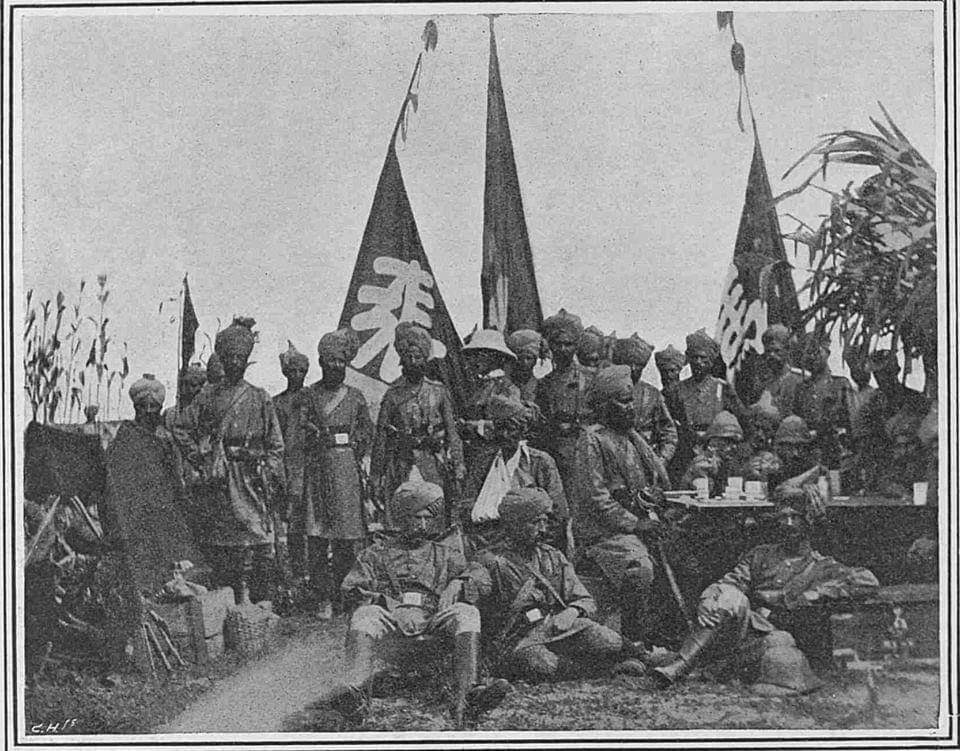
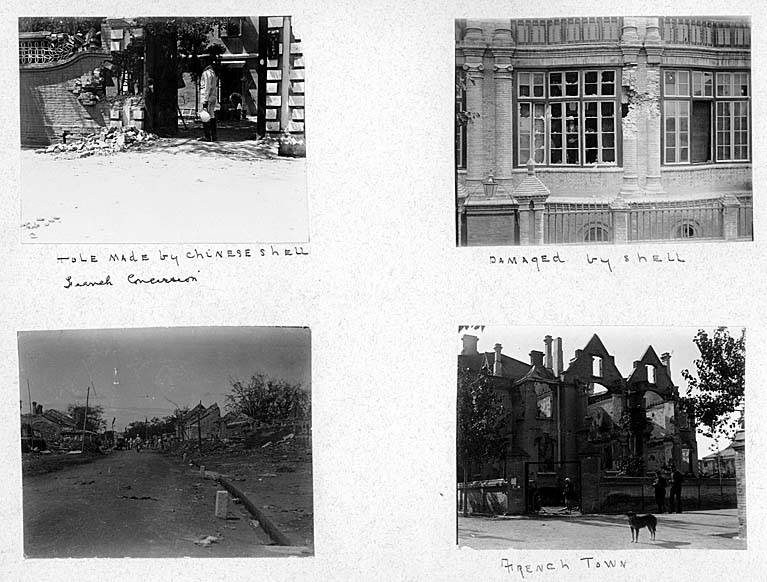
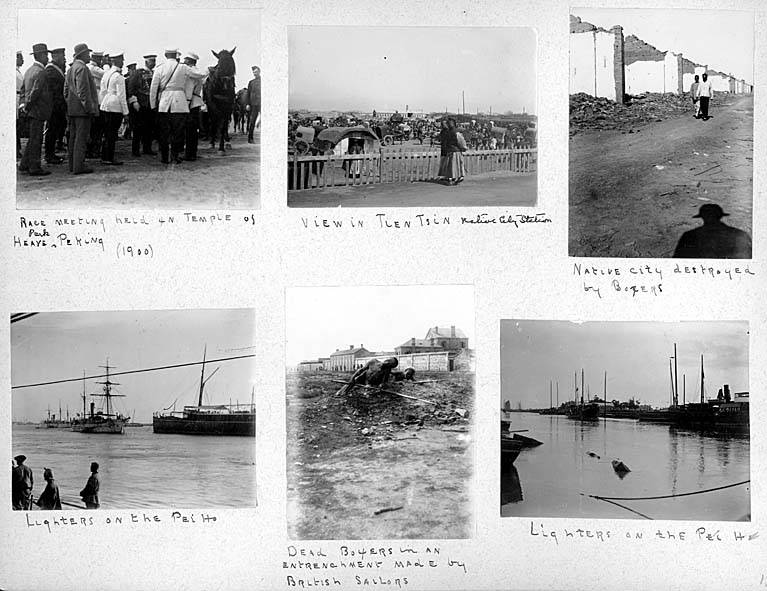
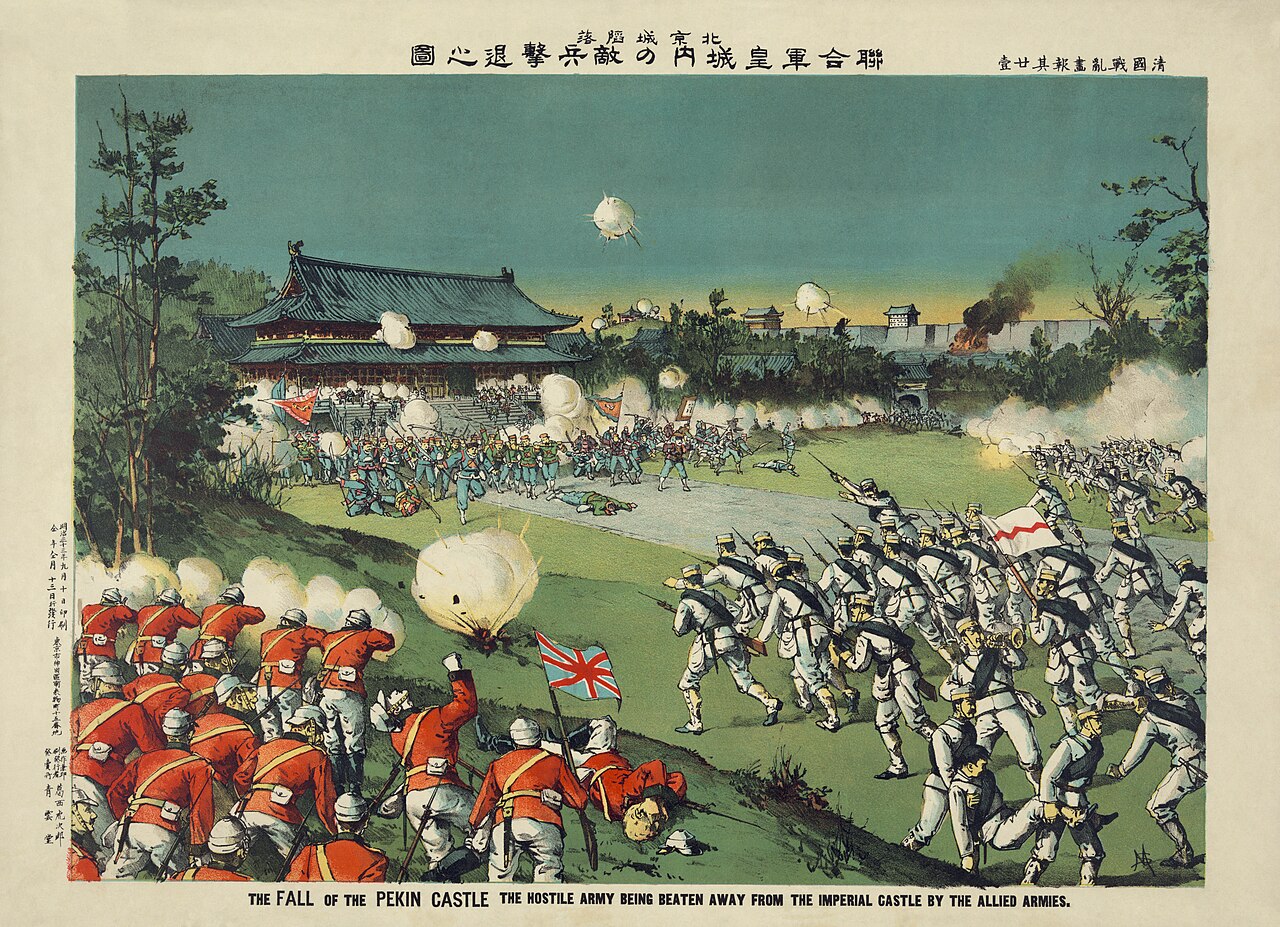
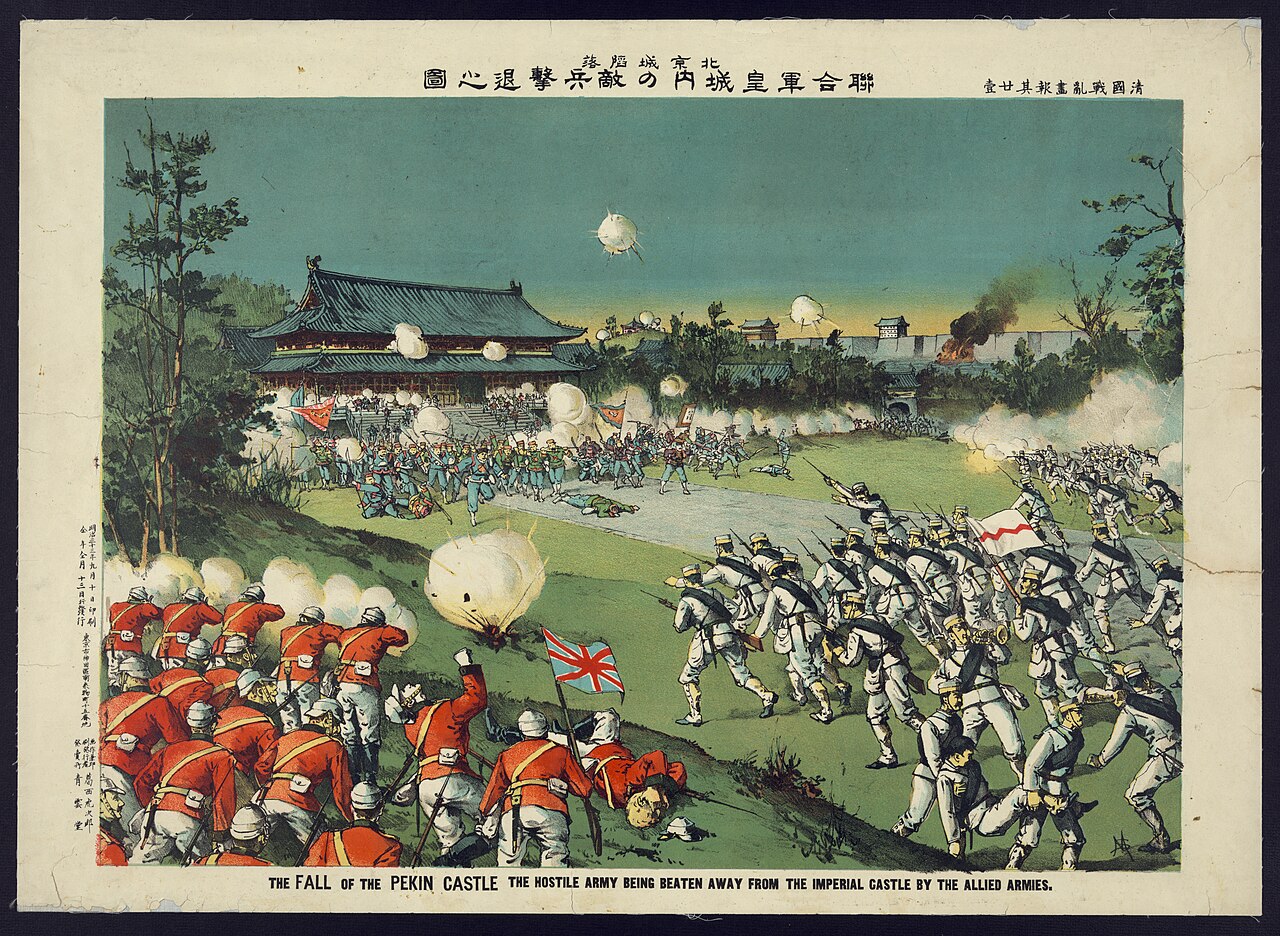
The Boxer Rebellion significantly weakened the Qing dynasty's credibility and control over China. Following the First Sino-Japanese War, villagers in North China feared the expansion of foreign spheres of influence and resented Christian missionaries who ignored local customs and used their power to protect followers in court. Natural disasters in 1898—including Yellow River flooding and droughts—were blamed on foreign and Christian influence. The movement culminated in June 1900 when Boxers converged on Beijing with the slogan 'Support the Qing government and destroy the foreigners,' besieging diplomats, missionaries, soldiers, and Chinese Christians in the Legation Quarter. Empress Dowager Cixi, initially hesitant, supported the Boxers and on June 21 issued an imperial decree that was a de facto declaration of war. The Eight-Nation Alliance—American, Austro-Hungarian, British, French, German, Italian, Japanese, and Russian troops—invaded, stormed the Dagu Fort at Tianjin on June 17, and lifted the siege on 14 August 1900 after 55 days. They plundered the capital and executed suspected Boxers. The Boxer Protocol of 7 September 1901 required execution of officials who supported the Boxers, stationing of foreign troops in Beijing, and payment of 450 million taels of silver over 39 years. The rebellion's failure led to the Late Qing reforms and, to a greater extent, the Xinhai Revolution.
Did You Know?
- The Boxers claimed supernatural invulnerability against cannons, rifle shots, and knife attacks, and demonstrated this to new initiates by firing guns loaded with blank rounds at one another.
- One Boxer leader, Zhu Hongdeng, started as a wandering healer specializing in skin ulcers and gained wide respect by refusing payment for his treatments.
- The Eight-Nation Alliance that defeated the Boxers comprised American, Austro-Hungarian, British, French, German, Italian, Japanese, and Russian troops.
- The Boxer Protocol of 7 September 1901 required China to pay 450 million taels of silver—more than the government's annual tax revenue—over 39 years to the eight invading nations.
- Officials in the southern provinces ignored the imperial order to fight against foreigners during the rebellion.
The Human Toll of Major Uprisings
The most devastating entries in the historical record of rebellions are defined less by their political aims than by the staggering number of lives they consumed. The Taiping Rebellion, which raged across China from 1851 to 1864, stands as a grim benchmark: between twenty and thirty million people perished, a figure that places it as the second deadliest conflict in recorded human history. The God Worshippers who led the uprising against the Qing dynasty turned an entire nation into a theater of destruction. Similarly, the Indian Rebellion of 1857 against the British East India Company carried consequences that reshaped the subcontinent, marking the definitive end of Mughal sovereignty. The American Civil War, spanning 1861 to 1865, pitted the United States against the Confederate States formed by eleven southern states, producing a conflict whose internal violence rivaled any foreign invasion. These events demonstrate that when rebellions erupt in densely populated or politically fragmented regions, the human cost can eclipse even the most ambitious military campaigns of the modern era.
Challenging Colonial and Imperial Power
Across the nineteenth century, a persistent thread connects rebellions that defied foreign dominion. In the Caribbean and Latin America, the struggle against Spanish rule produced a cascade of uprisings: the Ten Years' War in Cuba (1868–78), led by Cuban-born planters including Carlos Manuel de Céspedes, the Little War of 1879–80, and the Grito de Lares in Puerto Rico in 1868, where rebels proclaimed independence from Spain. The Dominican Republic fought two wars of independence against Spain and a third conflict, the Six Years' War (1868–74), to resist annexation by the United States. In South and Southeast Asia, the Indian Rebellion of 1857 ended Mughal rule under the British East India Company, while Vietnam's Cần Vương movement (1885–96), guided by Emperor Hàm Nghi, sustained resistance against French colonialism for over a decade. Egypt's Urabi Revolt of 1879–82 challenged both the Khedive and broader European influence. These episodes reveal a shared impulse: communities asserting sovereignty against powers that treated them as possessions rather than nations.
The Volatile 1860s: A Decade of Transformative Uprisings
The 1860s stand out as an extraordinary concentration of revolutionary upheaval across multiple continents. In the United States, the Civil War (1861–65) tore the nation apart, while the New York Draft riots of 1863 and the Free State of Jones counter-rebellion in Mississippi added layers of internal conflict. In Europe, the January Uprising (1863–65) saw Poles rise against the Russian Empire, and the Glorious Revolution of 1868 deposed Queen Isabella II of Spain. Japan's Meiji Restoration (1866–68) overthrew the shogunate through samurai-led revolution, establishing a modern parliamentary system modeled on Western institutions. The Fenian Rising of 1867 attempted a nationwide Irish rebellion against British rule. In the Americas, the War of the Reform continued in Mexico, and the Morant Bay rebellion erupted in 1865. This single decade produced more transformative political ruptures than many prior generations, reshaping governments from Tokyo to Dublin to Washington.
The Long Struggle Against Ottoman Rule
The Ottoman Empire faced a sustained wave of rebellions that, over several decades, progressively eroded its territorial control. In the Balkans, the Herzegovina Uprising (1852–62) was followed by Pecija's First Revolt in Ottoman Bosnia (1858) and the more famous Herzegovinian rebellion of 1875–77, which spread unrest across Ottoman Bosnia. Bulgarian populations mounted multiple revolts against Ottoman authority: the Stara Zagora Uprising (1875), the April Uprising (1876), the Razlovtsi insurrection (1876), the Kumanovo Uprising (1878), and the Kresna–Razlog uprising (1878). These local insurrections coincided with broader regional wars—the Serbian-Turkish Wars (1876–78), the Montenegrin–Ottoman War (1876–78), and Romania's War of Independence (1877–78)—that collectively dismantled Ottoman dominance in the Balkans. The pattern was consistent: localized grievances over taxation, religious freedom, and political autonomy ignited popular resistance that, when combined with neighboring states' military campaigns, proved devastating to imperial authority.
Gallery
Frequently Asked Questions
Who is Boxer Rebellion?
Boxer Rebellion is the fan-encyclopedia name for the anti-foreign, anti-Christian uprising that swept through North China from 1899 to 1901. It was organized by the Society of Righteous and Harmonious Fists, whose martial-arts practitioners earned the English nickname 'Boxers.'
What are Boxer Rebellion's powers/role?
In this entry, Boxer Rebellion's 'role' is that of an anti-imperialist resistance targeting foreign legations, missionaries, and their Chinese converts. Its signature 'act' was the weeks-long Siege of the Legation Quarter in Beijing, where Boxers and Qing troops held off foreign diplomats and their armed guards.
How does Boxer Rebellion's story end?
The uprising was crushed in 1901 when the Eight-Nation Alliance, a joint military force of eight foreign powers, marched on Beijing and broke the Boxers' resistance. The Qing court was then compelled to sign the Boxer Protocol, bringing the movement to a definitive close.
Why is Boxer Rebellion important?
It remains one of the most dramatic mass confrontations with foreign imperialism in late-Qing China and permanently altered the region's diplomatic landscape. Its defeat and the punitive Boxer Protocol deepened China's semi-colonial condition, helping to ignite the revolutionary currents that later toppled the Qing dynasty.
What is Boxer Rebellion's slogan?
The movement's rallying cry was 'Support the Qing government and destroy the foreigners,' a phrase that captured its dual loyalty to the imperial throne and its fierce opposition to foreign presence. This motto became the defining identity marker of the Boxers in popular memory.
More in Revolutions & Uprisings 1-15
Spotted an error? Know more?
This is a living reference — every entry is fact-audited, and reader corrections feed straight into our audit queue. Suggest an edit · See this site's audit record